

5 Simple Child‑Centered Sensory Regulation Activities for Cold/Snowy Weeks
By Kelly Budnick, MOT, OTR/L
When cold or snowy weeks keep everyone indoors, energy tends to build up quickly. What looks like restlessness is often a child’s nervous system needing movement, connection, or sensory input. The good news is you don’t need elaborate plans or special equipment. A few simple, child-led activities can support regulation, ease tension, and make long winter days feel more manageable for everyone. Here are five sensory regulation activities for cold and snowy weeks.

Indoor “Snow” Obstacle Adventure
Sensory Focus: Proprioception (heavy work) + vestibular (movement)
Approach: Child-led, shared joy
Materials: Couch cushions, pillows, blankets, taped “paths,” laundry basket
How it supports regulation:
Heavy work (pushing/pulling, crawling, lifting, weightbearing activities) helps the nervous system organize.
Child chooses the route or adds challenges, promoting engagement and intrinsic motivation.
How to do it:
Invite your child to create a “winter explorer course.”
Offer options: crawling under “snow tunnels,” carrying a “supply basket,” pushing a snow dogsled, leaping over “snow drifts,” etc.
Follow your child’s lead—join them, imitate them, build off their play themes, and narrate their efforts (“You’re working hard pushing that sled!”).
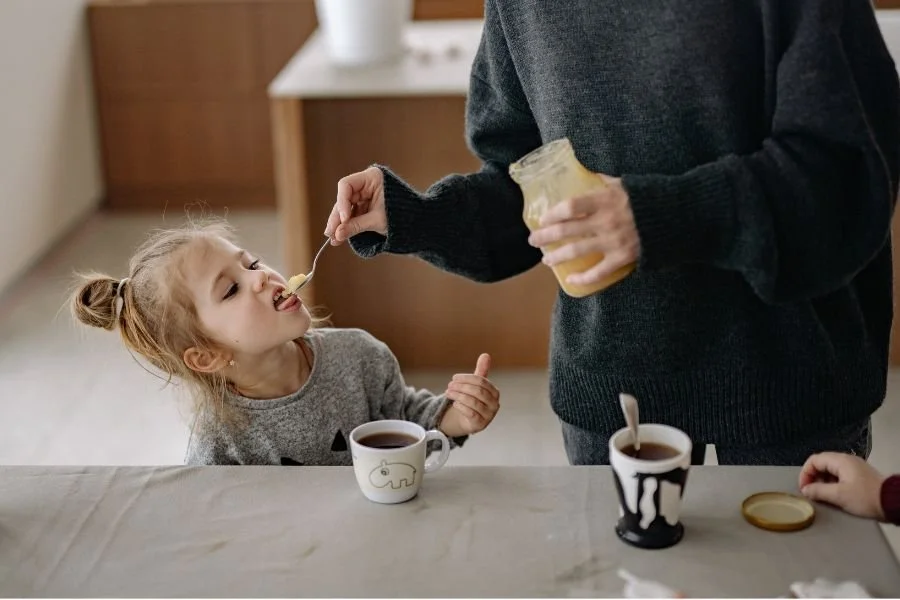
2. Warm Sensory Cocoa Station
Sensory Focus: Interoception (recognizing body signals) + tactile (touch) + gustatory (smell)
Approach: Co-regulation with sensory exploration
Materials: Warm water, cocoa powder, cups, spoons, optional sensory-safe alternatives
How it supports regulation:
Warmth and familiar smells support calming.
Pouring, scooping, and mixing give structured tactile input
Interoceptive awareness grows through noticing/observing sensations in the body (“warm, cold, soft, dry,” etc.)
How to do it:
Make a small “cocoa lab.” Allow your child to:
Scoop cocoa
Pour warm water
Mix at different speeds
Add toppings (marshmallows, sprinkles, whip cream, etc.)
Taste and smell cocoa
Encourage them to tell you how it feels or smells (“Is this warm enough?” “Does it smell cozy or strong?”).
3. Winter Nature Treasure Hunt (Indoors or Outdoors)
Sensory Focus: Visual + tactile (touch) + vestibular (movement)
Approach: Child-directed exploration
Materials: Basket, simple picture checklist of nature items or descriptor words (ie. “shiny, bumpy, cold”)
How it supports regulation:
Scanning and seeking give organizing visual input
Outdoor cold air (if available) can be alerting; indoor scavenging can be calming and purposeful.
Builds relational attunement/connection with caregiver/parent
How to do it:
Indoors example: “Find something soft, something cold, something shiny.”
Outdoors example: “Find something frozen, something bumpy, something tiny.”
Let them choose the pace, direction, or additional items to add the treasure hunt visual picture list

4. Blanket Burrito + Animal Walks
Sensory Focus: Deep pressure (proprioception)
Approach: sensory modulation (heavy work), playful co-regulation
Materials: Blanket, open floor space, various colored paper tapes
How it supports regulation:
Deep pressure from rolling promotes calming.
Heavy work animal walks help organize the sensory system.
Parent joins in to create shared rhythm and connection.
How to do it:
Have the child assist in creating a paper tape pathway inside on floors
Invite the child to participate in animal walks: bear crawls, penguin waddles, snow leopards jumps, etc. Model the animal walks if needed.
Follow the paper pathway as a different animal each time (optional use different color tapes to represent different animal walks throughout the pathway)
Transition to blanket burrito for calming deep pressure. Invite your child to roll themselves into a blanket burrito (respecting their comfort level).
Add playful choices: “Do you want gentle squeezes or light pats?”
5. “Snowstorm in a Jar” Calm & Focus Station
Sensory Focus: Visual regulation + tactile (touch) (if child helps make it)
Approach: activity/occupation-based; calming tools
Materials: Jar with lid, white/silver glitter, water, clear glue (more glue = slower fall (calming), more water = faster fall (alerting), optional: gorilla glue to secure lid and small plastic toys or objects to float inside
How it supports regulation:
Watching moving glitter promotes visual focus and sustained attention.
Child helps create it, giving a sense of ownership and agency.
Provides an accessible visual calming tool on cold indoor days.
How to do it:
Create a “snowstorm jar” together with materials
Shake the jar and watch the “snow” fall.
Pair with co-regulation: soft voice, slow breathing, shared observation (“Let’s watch the snow settle together.”).
Optional: Search and find. Ask the child to search and find various toy items in the jar. Consider adding a picture checklist to check off the items.