

Research‑Supported Approaches to Growing Executive Function Skills
By Kelly Budnick, MOT, OTR/L
Executive Functioning Skills in Childhood
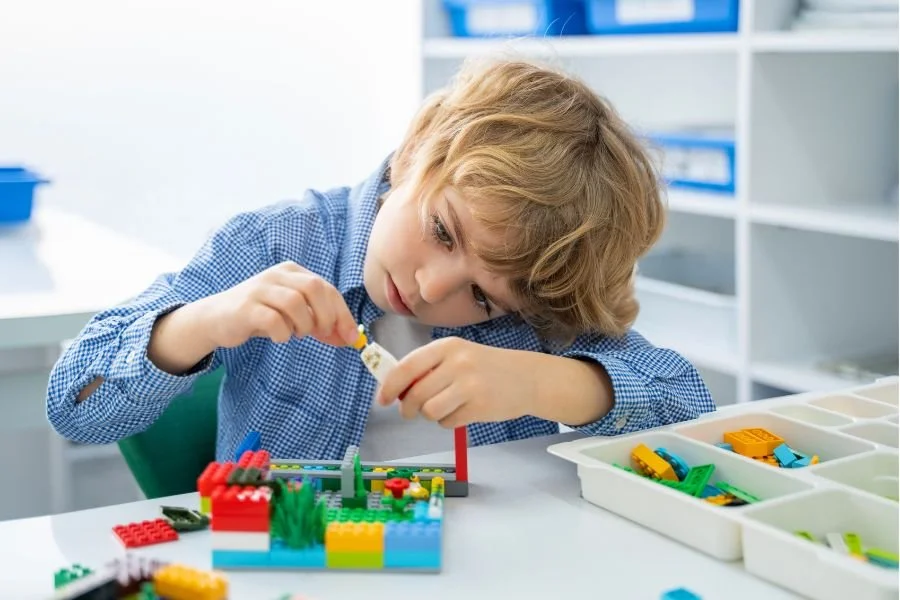
Executive functioning skills are the mental tools people use to manage everyday life. For children, these skills help them hold information in mind, stop and think before acting, shift gears when plans change, plan and organize work, and manage their emotions and behavior. These abilities allow a child to start tasks, stay focused, handle frustration, and follow through—even when something is difficult or uninteresting. Research over the past decade shows that executive functioning skills develop over time as the brain matures, and with intentional support, children can meaningfully strengthen these skills (Birtwistle et al., 2025). Large‑scale evidence confirms that executive functioning can be intentionally fostered in childhood through structured interventions, although long‑term maintenance of gains often requires ongoing support (Takacs & Kassai, 2019).
Effective Approaches to Teaching Executive Functioning Skills
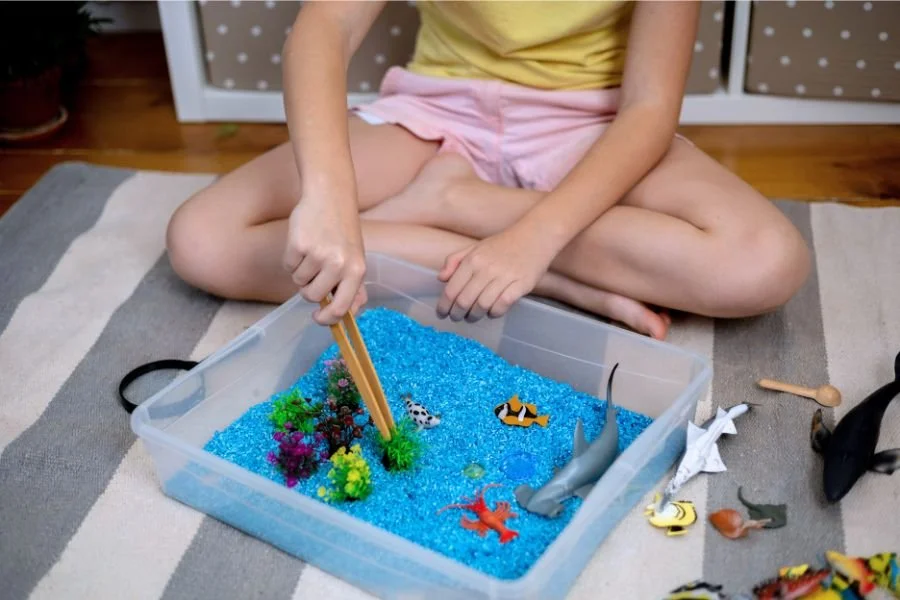
Research shows that how we teach executive functioning (EF) skills is just as important as what we teach. A major research review found that children benefit most from explicit, practical strategy instruction, particularly those with learning, attention, or behavioral challenges (Takacs & Kassai, 2019). One effective approach is biofeedback‑enhanced relaxation, which helps children understand how their bodies respond to stress. With biofeedback tools—such as heart‑rate or breathing sensors—children can observe their physiological responses and learn to regulate them through practices like slow breathing or progressive muscle relaxation (Birtwistle et al., 2025). Research also supports the effectiveness of mindfulness practices, including guided breathing, yoga‑based movement, and sensory‑focused activities using weighted or textured objects, which help children improve attention and emotional regulation (Portela Diéguez et al., 2024). In contrast, repetitive “brain‑training” drills and computer‑based training programs produce only modest benefits, especially for children with developmental differences (Pasqualotto et al., 2021).
The Role of Adult Coaching and Co‑Regulation
Effective support for children’s executive functioning often includes adult coaching and co‑regulation. A trusted adult helps the child slow down, reflect, and choose appropriate strategies. This guidance may include prompts such as “What’s my plan?” or “Is this working?” Teaching children to reflect on their thinking enhances metacognition, making EF strategies more applicable in real‑world situations than isolated practice alone (Faja et al., 2022). Co‑regulation also supports children’s emotional regulation by helping them remain calm and focused during challenging tasks.

Embedded, Real‑Life Practice to Strengthen Skills
Recent research emphasizes that children learn executive functioning skills best when they are practiced during meaningful, everyday activities rather than through artificial tasks. Coaching models in which adults scaffold problem‑solving, emotion regulation, and strategy selection help children generalize EF skills from structured practice to home, school, and peer interactions (Xu et al., 2025). Embedding these supports into daily routines also helps children set goals, monitor progress, and adjust strategies in real time—skills that are difficult to develop through abstract drills alone. Simple supports like mindfulness breaks, step‑by‑step strategies, and structured guidance during challenging moments meaningfully strengthen working memory, impulse control, and flexible thinking. Because improvements can fade without reinforcement, consistent use of EF strategies and ongoing refreshers help maintain long‑term gains (Takacs & Kassai, 2019).

Pediatric Occupational Therapy as Executive Function Coaching
Pediatric occupational therapy (OT) plays a meaningful role in supporting executive functioning by acting as an individualized coaching partner for children. Occupational therapists use hands‑on, developmentally appropriate strategies to strengthen attention, planning, emotional regulation, and flexible thinking within daily routines. Research shows that occupational‑therapy interventions—particularly Ayres Sensory Integration® approaches—produce measurable improvements in executive functioning, emotional regulation, and participation for children with neurodevelopmental conditions such as ADHD (Kaplan Kılıç et al., 2026). In addition to sensory‑integration‑based approaches, pediatric OTs provide task‑specific coaching, co‑regulation, environmental modification, and real‑world strategy modeling. These practices align with broader executive‑function research emphasizing the importance of guided practice in meaningful contexts. When embedded into natural routines and paired with consistent adult support, OT‑based executive function interventions help children not only learn effective strategies but also apply them consistently, promoting independence and long‑term functional success.

References
Birtwistle, E., et al. (2025). Training of executive functions in children: A meta‑analysis. SAGE Open. https://doi.org/10.1177/21582440241311060
Takacs, Z. K., & Kassai, R. (2019). The efficacy of different interventions to foster children’s executive function skills. Psychological Bulletin, 145(7), 645–671. https://doi.org/10.1037/bul0000195
Faja, S., et al. (2022). A randomized controlled trial of executive function training for children with autism. Autism. https://eric.ed.gov/?id=EJ1328207
Kaplan Kılıç, B., Bumin, G., Öğütlü, H., & Türkçapar, M. H. (2026). Comprehensive effects of occupational therapy using Ayres Sensory Integration® in children with ADHD: A randomized controlled trial. The American Journal of Occupational Therapy, 80(1), 8001185020. https://doi.org/10.5014/ajot.2025.051083
Pasqualotto, A., et al. (2021). Effects of cognitive training programs on executive function in children and adolescents with ASD. Brain Sciences, 11(10), Article 1280. https://www.mdpi.com/2076-3425/11/10/1280
Portela Diéguez, M., et al. (2024). Mindfulness‑based executive function training in elementary school students. Mindfulness, 15(4), 1–12. https://doi.org/10.1007/s12671-024-02474-8
Xu, Y., et al. (2025). Cognitively engaging physical activity and executive function: A randomized controlled trial. Frontiers in Psychology. https://www.frontiersin.org/articles/10.3389/fpsyg.2025.1628814/full